24/7 Emergency Fire Damage Restoration in Ventura
24/7 emergency fire damage restoration in Ventura and surrounding areas. IICRC-certified, insurance billing accepted. Call (805) 290-7292.
Fire damage emergency in Ventura? We answer 24/7, and the hours right after the fire trucks leave matter more than most homeowners realize. Smoke residue is acidic and keeps etching into metal, glass, and finishes for days after the flames are out, while the water used to fight the fire soaks into drywall, subflooring, and insulation. Fire cleanup isn’t just about the burned room, it’s about stopping secondary damage in every room smoke and water reached before it sets in permanently.
What fire damage restoration actually involves
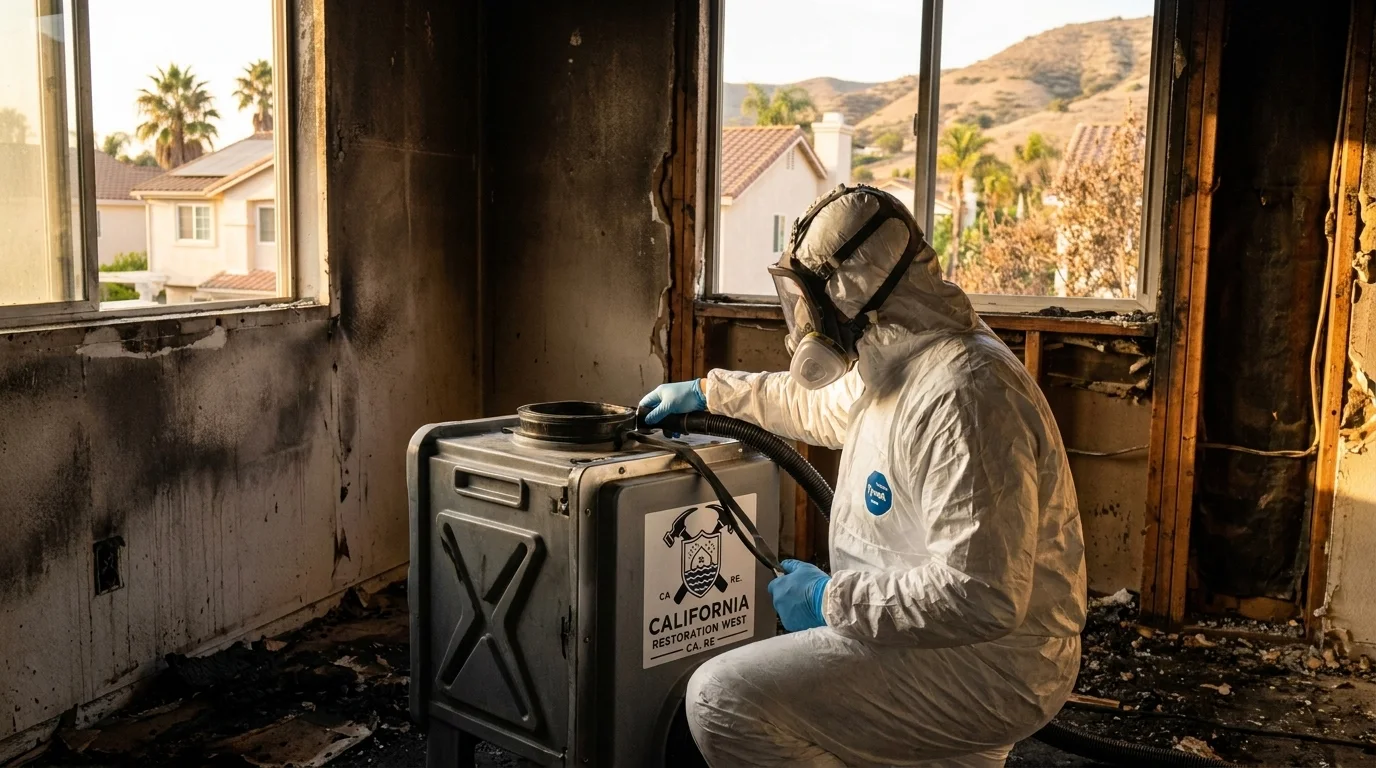
Fire damage restoration covers everything between “the fire is out” and “the home is livable again”: soot and smoke odor removal, structural drying from firefighting water, cleaning or replacing contents, and coordinating repairs for anything charred or structurally compromised. The work looks different depending on what burned. A kitchen grease fire produces a different soot profile than a wiring fire in the attic or a wildfire ember intrusion through vents and eaves, which is a real exposure for homes near Ventura’s hillside and canyon edges. Equipment on a typical fire job includes HEPA air scrubbers, thermal foggers, ozone or hydroxyl generators for odor, and the same moisture meters and dehumidifiers used on water losses, since nearly every fire scene has a water damage component layered underneath the smoke damage.
Our process
- Soot characterization. Before any cleaning starts, we identify whether the residue is protein soot (from a kitchen or organic fire), synthetic soot (from plastics, furniture, electronics), or a mix, because the cleaning agents and techniques differ for each.
- Pre-cleaning and contents triage. Salvageable items are sorted for on-site cleaning versus pack-out to an offsite facility for ultrasonic cleaning, ozone treatment, or specialty laundering.
- Structural cleaning. Walls, ceilings, framing, and HVAC components are cleaned or encapsulated depending on how deep the soot has penetrated the substrate.
- Thermal fogging and ozone or hydroxyl treatment. Odor isn’t masked, it’s neutralized at the molecular level by matching the fog particle size to how the smoke originally traveled through the structure, then sealing in remaining odor-causing residue.
- Reconstruction handoff. Charred framing, flooring, or drywall gets scoped for repair or rebuild, with that scope documented for the adjuster before demo work begins.
What separates a good fire damage response from a bad one
The most common mistake is treating fire damage as a surface cleaning job and skipping moisture detection entirely. Firefighting water migrates into wall cavities and under flooring where it’s invisible until mold shows up weeks later, so a thorough response checks moisture content in every affected material, not just the visibly charred ones. Another frequent miss is under-scoping smoke penetration: soot travels through HVAC ductwork and settles in rooms that never saw flame, and adjusters increasingly expect documentation showing which rooms were tested and cleared, not just which rooms burned. Odor callbacks are usually a sign that a crew masked the smell instead of treating the source, commonly unsealed porous materials like insulation or subflooring that should have been removed rather than deodorized. Good documentation, room-by-room photos, moisture readings, and a written scope before demolition, is what keeps a claim moving instead of getting disputed line by line.
What does fire damage restoration cost?
Fire damage repair costs vary more than almost any other restoration category because they depend on how far the fire spread, how much smoke traveled through the HVAC system, and how much content needs pack-out versus on-site cleaning. Most homeowners insurance policies cover fire damage restoration and the related smoke and water cleanup, though coverage for contents cleaning and temporary housing depends on the specific policy. California Restoration West documents the loss and provides a written scope before any work begins so you know what’s included and what isn’t.
| Scenario | Typical range |
|---|---|
| Single room smoke damage, minor char | $2,500 - $7,000 |
| Kitchen fire with grease soot, adjacent rooms affected | $8,000 - $20,000 |
| Whole-house smoke odor and soot cleaning | $15,000 - $40,000 |
| Structural fire with framing or roof damage | $40,000 - $100,000+ |
| Contents pack-out and ultrasonic cleaning (per room) | $1,500 - $4,000 |
Seasonal & regional considerations
Ventura’s dry season and Santa Ana wind events raise the risk of wildfire-related smoke intrusion even for homes that never saw direct flame, particularly in hillside neighborhoods and homes near open space where ember drift carries soot through attic vents and window gaps. Marine layer humidity along the coast can also slow structural drying after firefighting water saturates a home, which is why moisture monitoring continues for days after the visible cleanup is done, not just until the smell goes away.
Service area
California Restoration West responds to fire damage calls throughout Ventura and the surrounding communities, including homes in the hillside and canyon areas where wildfire exposure is highest.
If a fire has touched your home, the smoke damage is still spreading even after the flames are gone. Call California Restoration West at (805) 290-7292 to begin smoke and soot removal before odor and residue set in permanently.
Frequently Asked Questions
Does homeowners insurance cover fire damage restoration?
What's the difference between protein soot and synthetic soot, and why does cleanup vary?
Why does my house still smell like smoke weeks after the fire?
Can smoke damage affect rooms that weren't near the fire?
Is firefighting water considered part of fire damage restoration?
Looking for the best fire damage restoration company in Ventura?
California Restoration West provides fire damage restoration in Ventura, CA and the surrounding area, and has served local property owners since 2025. Customers rate us 5.0 out of 5 stars across 9 Google reviews. We answer calls 24/7 — call (805) 290-7292 for immediate help.
Need Fire Damage Restoration now?
We respond 24/7 across Ventura and surrounding CA cities.
Related Coverage
- Our Restoration Services
- Contact California Restoration West
- Restoration Services in Camarillo
- Restoration Services in Carpinteria
- Restoration Services in Castaic
- Restoration Services in Fillmore
- Restoration Services in Hasley Canyon
- Restoration Services in Lake Sherwood
- Restoration Services in Mira Monte
- Restoration Services in Moorpark
- Restoration Services in Oak Park
- Restoration Services in Oak View
- Restoration Services in Ojai
- Restoration Services in Oxnard
- How To Choose a Restoration Company in Ventura (Without Getting Burned)
- The Fire Damage Restoration Process, Explained