
Water Leak Detection in Ventura
24/7 water leak detection in Ventura and surrounding areas. IICRC-certified, insurance billing accepted. Call (805) 290-7292.
A moldy smell behind the baseboard. A water bill that jumped sixty dollars for no reason. A warm patch on the slab floor near the hallway bathroom. None of these show a drop of standing water, but they’re the three most common reasons Ventura homeowners call asking about water leak detection. By the time water is visible on a ceiling or wall, it has usually been traveling through framing, insulation, or sub-slab soil for weeks. Leak detection finds the source before drywall comes down and before a small copper pinhole turns into a structural repair.
What water leak detection actually involves
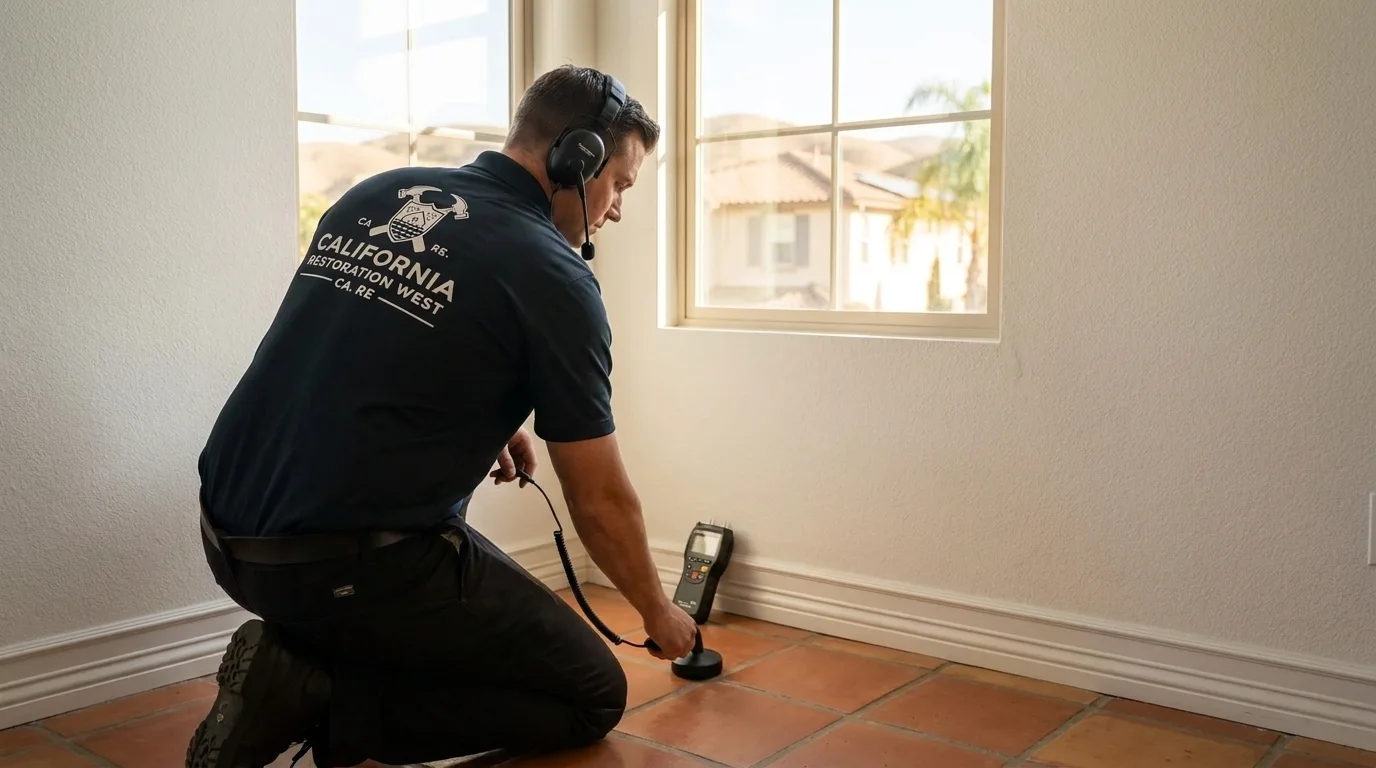
Leak detection is a diagnostic service, separate from the repair itself. A technician uses acoustic listening equipment to pick up the sound of pressurized water escaping a pipe (a distinct hiss or ticking that travels through slab and framing), paired with thermal imaging to map temperature differences where water is cooling a surface from behind. Moisture meters confirm what the thermal camera suggests, and in slab cases, a pressure test on isolated plumbing zones narrows the leak to a specific line before anyone touches a floor. The goal is a documented, pinpointed location, not a guess that costs you a demolished wall for nothing.
Most residential leak detection visits take one to three hours depending on the size of the home and whether the suspected leak is in a wall, under a slab, or tied to a fixture like a water heater or shower pan. Slab leaks typically take longer to isolate because the plumbing runs under concrete and through multiple zones that have to be tested one at a time.
Our process
- Interview and symptom review. We start with what you’ve noticed: the sound of water, a spike in your bill, a damp spot that comes and goes, or a musty smell with no visible source.
- Acoustic and thermal scanning. Listening equipment and infrared cameras scan walls, floors, and accessible plumbing runs to narrow the search area without any cutting.
- Moisture mapping. Meters confirm elevated moisture readings at the suspected point and rule out false positives from condensation or surface humidity.
- Pressure isolation testing (slab and multi-zone leaks). Individual plumbing zones are pressurized and monitored to identify which line is losing pressure, which pinpoints the leak to a specific run rather than a general area.
- Documented findings and referral. You get a written report with the leak location, moisture readings, and photos, which you or your plumber can use to scope the actual repair, and which an adjuster will want to see if you’re filing a claim.
What separates a good leak detection response from a bad one
The most common mistake is skipping diagnostics and cutting drywall or concrete based on a guess. That approach sometimes finds the leak, and sometimes opens three holes before the real source turns up in a fourth spot, at the homeowner’s expense each time. A technician working without acoustic or thermal equipment is relying on visible staining alone, which often points to where water pooled, not where it entered.
A second mistake is stopping at the first moisture reading without checking for secondary wet zones. Water traveling along a stud bay or under a slab doesn’t always exit where it entered, so a single reading can miss a second affected area that shows up as mold three months later. Insurance adjusters reviewing a claim specifically look for dated moisture readings, photos of the pinpointed source, and a clear line between the leak and any resulting damage. Detection reports that document all of this hold up better during claim review than a plumber’s verbal description.
What does water leak detection cost?
Costs vary with how accessible the suspected leak is and whether slab penetration or multi-zone pressure testing is required. Every property is different, which is why California Restoration West provides a written scope of the detection process, and any follow-up moisture assessment, before work begins. Homeowners insurance often covers the cost of detection when it’s tied to a covered water loss, though policies vary on whether they cover detection alone versus detection bundled with the repair.
| Scenario | Typical range |
|---|---|
| Single fixture or accessible wall leak | $200 - $450 |
| Slab leak detection, single zone | $350 - $650 |
| Multi-zone pressure isolation testing | $500 - $900 |
| Whole-house leak isolation with thermal scan | $600 - $1,200 |
| Detection combined with moisture mapping report for insurance | $450 - $950 |
Seasonal & regional considerations
Ventura’s housing stock includes a large share of homes built in the 1950s through 1970s, many with copper supply lines run directly under the slab. Copper of that age is prone to pinhole leaks from pitting corrosion, and the region’s seismic activity can stress joints over time even without a major quake. Coastal humidity also means condensation on cold water lines or poorly insulated ductwork can mimic a leak’s symptoms, which is part of why thermal and acoustic confirmation matters before anyone opens a wall.
Service area
California Restoration West is based in Ventura and handles leak detection throughout the surrounding area, including Oxnard, Camarillo, Santa Paula, and Ojai. Housing stock and plumbing age vary block to block in this region, which is part of why each inspection starts with a conversation about the specific symptoms at your address rather than a standard checklist.
If something in your home doesn’t add up, a damp patch, a rising bill, a smell that won’t go away, schedule a water leak detection visit before it becomes a bigger repair. Call (805) 290-7292 to set up an inspection, day or night.
Frequently Asked Questions
Does homeowners insurance cover water leak detection?
How do you find a leak behind a wall without cutting it open first?
What makes slab leak detection different from a wall leak?
My water bill went up but I don't see any water anywhere. Could that still be a leak?
What should I do while waiting for a leak detection appointment?
How long does a typical leak detection visit take?
Looking for the best water leak detection company in Ventura?
California Restoration West provides water leak detection in Ventura, CA and the surrounding area, and has served local property owners since 2025. Customers rate us 5.0 out of 5 stars across 9 Google reviews. We answer calls 24/7 — call (805) 290-7292 for immediate help.
Need Water Leak Detection now?
We respond 24/7 across Ventura and surrounding CA cities.
Related Coverage
- Our Restoration Services
- Contact California Restoration West
- Restoration Services in Camarillo
- Restoration Services in Carpinteria
- Restoration Services in Castaic
- Restoration Services in Fillmore
- Restoration Services in Hasley Canyon
- Restoration Services in Lake Sherwood
- Restoration Services in Mira Monte
- Restoration Services in Moorpark
- Restoration Services in Oak Park
- Restoration Services in Oak View
- Restoration Services in Ojai
- Restoration Services in Oxnard