
TL;DR: Odor control and deodorization uses hydroxyl generators, thermal fogging, HEPA air scrubbers, and enzymatic cleaners to break down odor molecules at the source rather than cover them with fragrance. Professional treatment typically takes one to three days depending on how deep the odor has soaked into drywall, subfloor, and insulation, and it almost always has to be paired with fixing whatever moisture or contamination problem is causing the smell in the first place.
If you’ve wiped down every counter in your Fillmore home near Central Park and that musty, sour smell from last winter’s slow roof leak still greets you at the front door, you’re past the point where cleaning products help. Odors that survive a thorough scrub-down usually mean the source, trapped moisture, mold colonization, or organic residue soaked into porous material, is still active somewhere behind a wall, under flooring, or inside insulation. Candles and plug-in air fresheners mask that smell for a few hours. They don’t touch what’s actually causing it.
What Causes a Persistent Odor After Water Damage or a Leak?
A lingering musty or sour odor after water damage almost always means moisture is still trapped in a wall cavity, subfloor, or piece of furniture, feeding bacterial or mold growth you can’t see. The smell itself is a byproduct of microbial activity, specifically microbial volatile organic compounds (MVOCs) released as mold and bacteria digest organic material like wood, paper, and drywall paper facing.
In older homes around Fillmore’s historic downtown and the agricultural properties near Sespe Creek, this shows up often after slow leaks that go unnoticed for weeks: a cracked supply line under a kitchen sink, a roof flashing failure during winter rains, or irrigation runoff wicking up into a crawl space. By the time the odor is noticeable, the source has usually had enough time and humidity to establish mold growth per the conditions the EPA outlines for indoor mold: moisture, a food source, and time. If you’re not sure whether what you’re smelling is mold versus simple mustiness, our post on how soon mold grows after water damage walks through the 24 to 48 hour window and what the smell usually means at each stage.
Other common sources: pet accidents that soaked into subfloor before anyone caught them, smoke infiltration from wildfire smoke drifting through the Santa Clara River Valley during fire season, and sewage backup residue in flooring and baseboards. Each of these needs a slightly different deodorization approach, which is why a walkthrough and moisture inspection come before any equipment gets set up.
How Do Restoration Professionals Actually Remove Odors?
Professional deodorization neutralizes odor molecules chemically or breaks them down with oxidizing agents, rather than layering fragrance over the top. The equipment and method depend on the odor source, the size of the space, and whether the space is occupied during treatment.
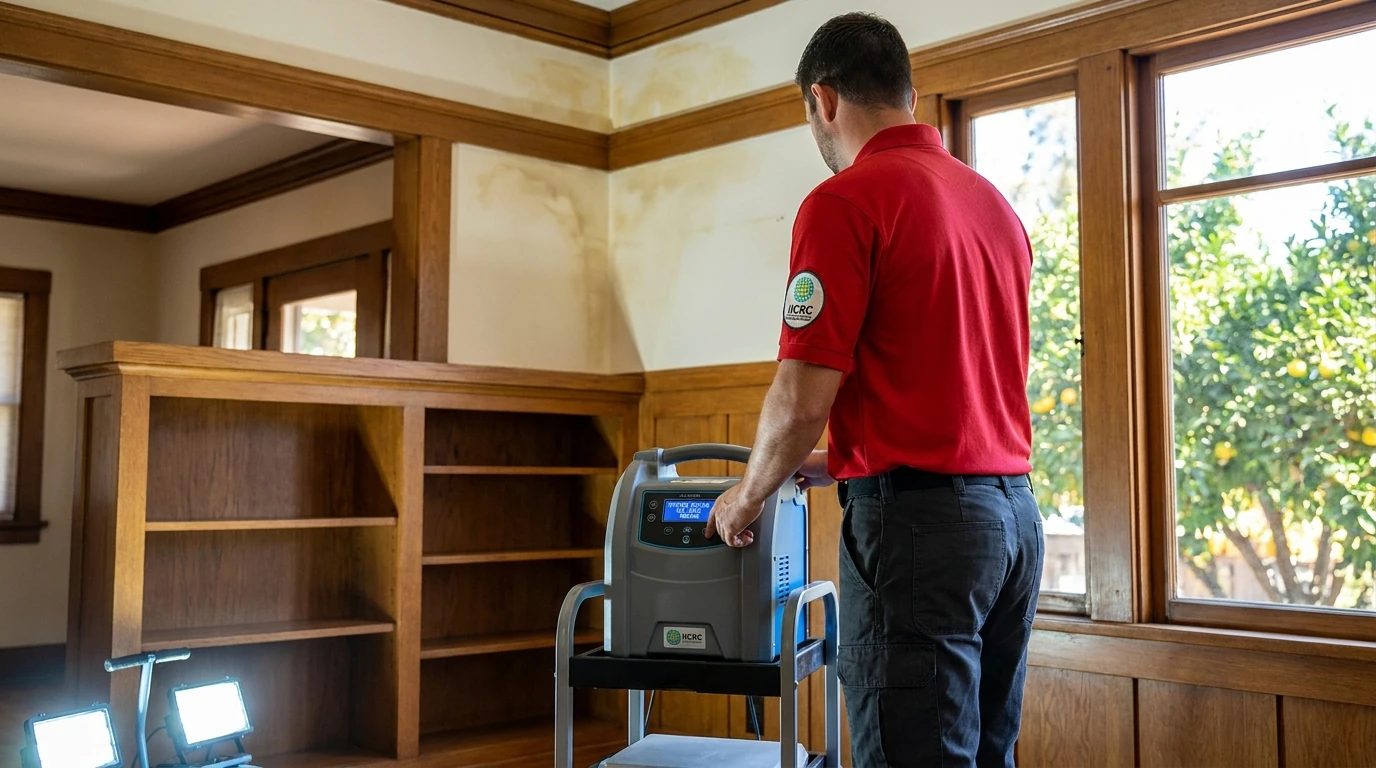
Hydroxyl generators produce hydroxyl radicals, the same molecules sunlight and atmosphere naturally use to break down pollutants outdoors, in a contained indoor setting. They’re slower than ozone but safe to run in occupied spaces, which makes them the default choice for most residential odor jobs.
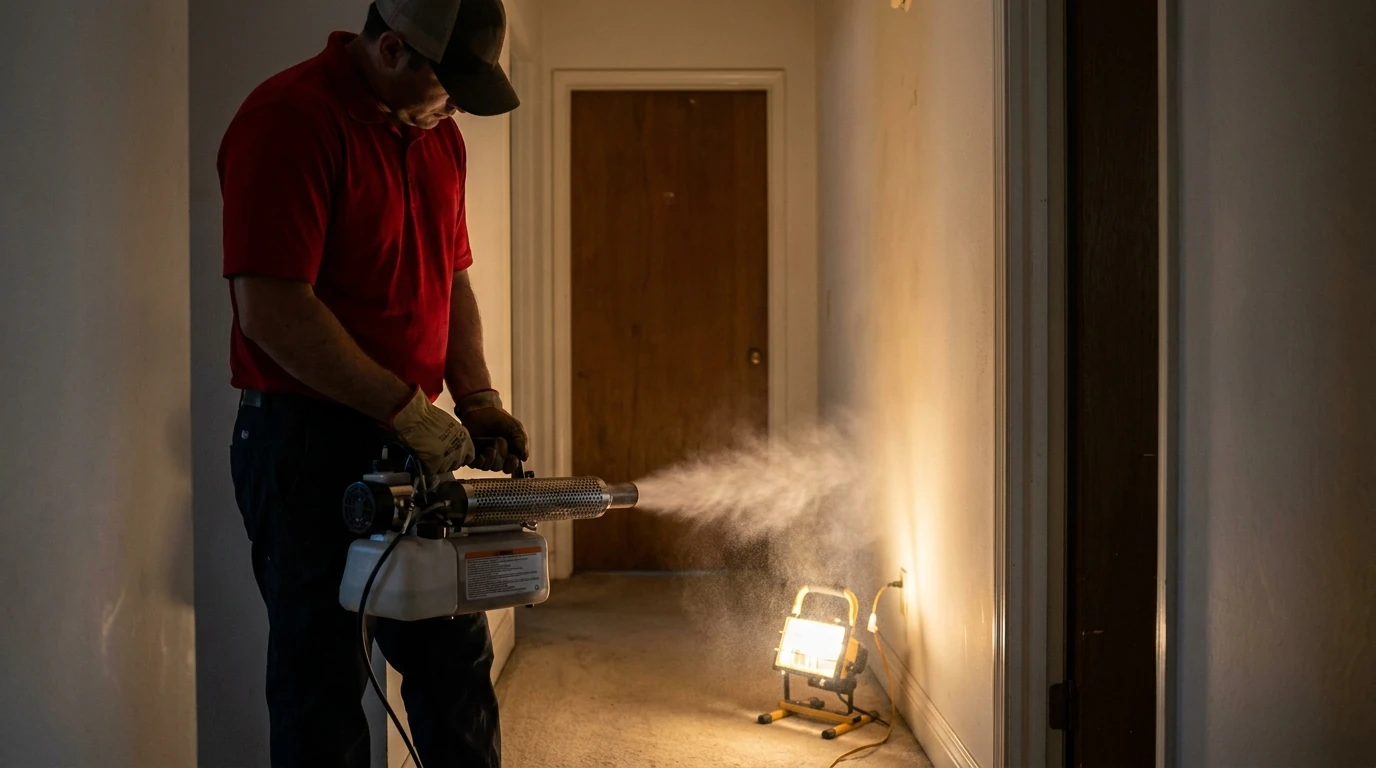
Thermal fogging vaporizes a deodorizing solution into a fine fog that follows the same air currents and penetration paths the original odor took, reaching into cracks, HVAC ducting, and wall cavities that surface cleaning never touches. It’s especially effective for smoke odor that has settled into fabric and porous surfaces.
HEPA air scrubbers filter airborne particulates, mold spores, and some odor-carrying particles out of circulation while other treatments work, and they’re standard equipment on any job involving mold or significant airborne debris.
Enzymatic and oxidizing cleaners applied directly to affected materials break down organic residue (pet urine, sewage contamination, food waste) at the molecular level rather than just lifting it off the surface.
Ozone generators are the most aggressive option and genuinely effective on stubborn odors, but they’re only used in unoccupied spaces since ozone is a respiratory irritant at the concentrations needed to be effective, and people and pets need to stay out until the space is fully aired out afterward.
Why Doesn’t an Air Freshener or Scented Candle Fix It?
Air fresheners and candles add a new scent on top of the problem instead of eliminating the odor molecules causing it, which is why the original smell always returns once the fragrance fades. Odor molecules from mold, smoke, and organic decay are chemically active, they’re still off-gassing from whatever material absorbed them. Spraying fragrance over that just gives your nose two smells to process at once, and most people stop noticing either one after a few minutes (a phenomenon called olfactory fatigue), which is exactly why residents often can’t smell a problem that’s obvious to a visitor walking in the door.
The only way to actually resolve a persistent odor is to identify and remove the source material if it’s beyond saving, dry and treat anything salvageable, and then run equipment that breaks down the remaining odor molecules in the air and in porous surfaces. Skipping straight to fragrance is the single most common reason odor complaints drag on for months.
What Does a Professional Deodorization Service Actually Involve?
A professional odor job starts with identifying the source, then treating the air and affected materials in sequence, not just running a machine and hoping. The general process looks like this:
- Moisture and source inspection. A technician uses a moisture meter and, where mold is suspected, inspects or tests the area to confirm what’s actually causing the smell before any equipment gets deployed.
- Source removal. Saturated insulation, ruined carpet padding, or contaminated subfloor material that can’t be cleaned gets removed, not deodorized in place.
- Cleaning and treatment of remaining materials. Enzymatic or antimicrobial treatments go on salvageable surfaces and structural materials.
- Air and surface deodorization. Hydroxyl generators or thermal fogging run for a set treatment cycle, often overnight or for 24 to 48 hours depending on severity.
- Verification. A follow-up walkthrough confirms the odor is gone, not just reduced, before the job is closed out.
Most residential odor jobs run one to three days total. Smoke odor that’s penetrated fabric and HVAC ductwork, or odor tied to an active mold colony, can take longer since remediation of the underlying contamination has to happen alongside the deodorization itself.
If the odor in your home traces back to standing water, a slow leak, or visible mold growth, deodorization alone won’t hold. It needs to be paired with proper water damage restoration or mold remediation to address what’s actually generating the smell. California Restoration West handles both alongside dedicated odor removal service for Fillmore and the surrounding Ventura County communities, so the source gets fixed, not just masked for a week.
About California Restoration West
California Restoration West is an IICRC-certified restoration firm serving Ventura, Fillmore, and surrounding Ventura County communities, founded in 2025. The company holds IICRC certifications in water restoration (WRT), mold remediation (AMRT), and applied structural drying (ASD), and offers 24/7 emergency service. Their crews handle water damage restoration, mold remediation, odor removal, storm damage restoration, contents restoration and storage, and crawl space encapsulation across the region.